Amid the global momentum toward supply chain decarbonization and a circular economy, WWS Group, a leading international manufacturer and supplier of daily-use ceramics, officially announced today the full-scale implementation of its Slip Sheet packaging innovation and plastic-reduction strategy across its production and global logistics operations. As a long-standing strategic partner to Fortune Global 500 retail giants including Walmart, Costco, M&S, and Sodimac, WWS Group reinforces its unwavering commitment to sustainable supply chain practices.
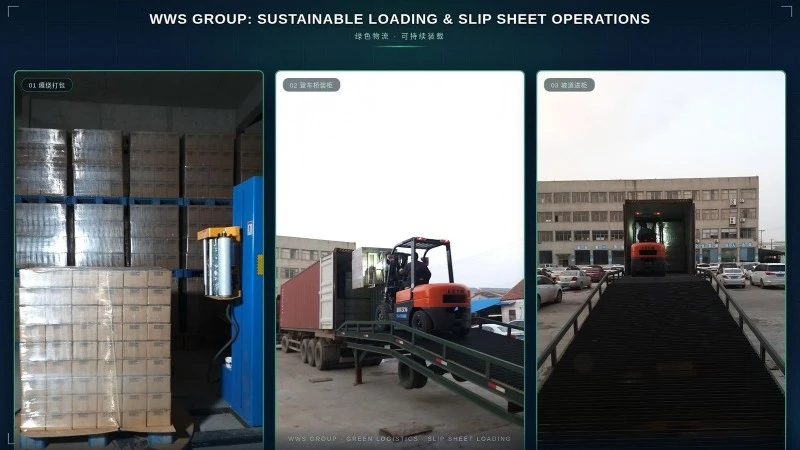
Breaking Traditional Boundaries: High-Efficiency Logistics in a 1-Millimeter Profile
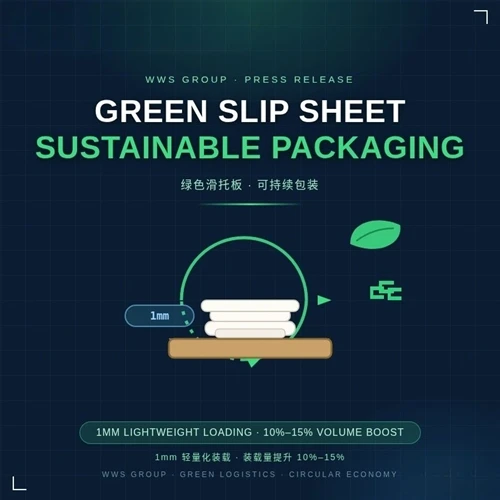
Daily-use ceramic products possess distinct physical characteristics: high density, heavy weight, and fragility. Traditional shipping models rely heavily on bulky wooden pallets, which consume significant cargo space. The Slip Sheet solution deployed by WWS Group is a thin load-bearing platform constructed from high-strength FSC®-certified kraft paperboard or high-density recyclable polymer. Measuring approximately 1 millimeter in thickness, it fundamentally transforms the transit framework compared to traditional wooden pallets (120–150 mm thick):
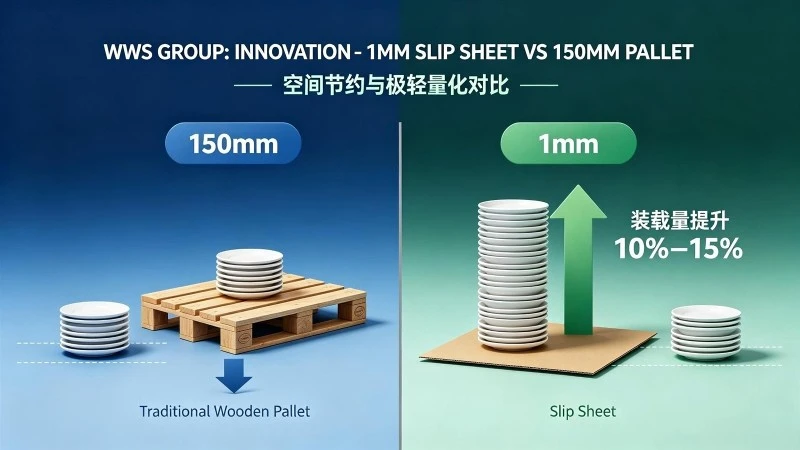
Maximizing Container Loading Volume: By liberating critical vertical space inside shipping containers, loading capacity for high-density ceramic products increases by 10% to 15% per container. This directly reduces total container usage, ocean freight shipments, and inbound/outbound storage overhead.
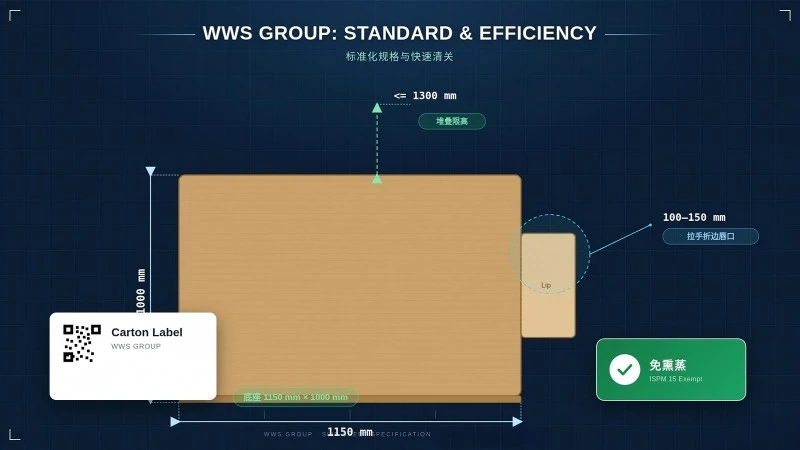
Zero-Wood Compliance & Streamlined Customs Clearance: Slip Sheets eliminate ISPM 15 wood packaging treatment and fumigation requirements, bypassing phytosanitary pest risks. Upon arrival at destination ports, materials can directly enter local paper/plastic recycling streams, enabling efficient customs clearance and resource recovery.
Advancing Scope 3 Decarbonization & The "REDESIGN" Waste Management Framework
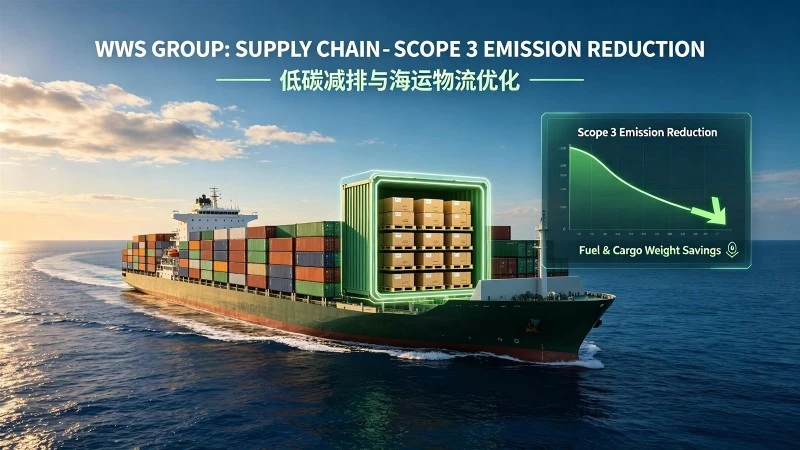
As a key driver for Scope 3 supply chain emission reduction, the lightweight nature of Slip Sheets minimizes gross shipment weight, cutting fuel consumption and greenhouse gas emissions across ocean and land transit routes. This initiative directly supports international retail partners in achieving their strict carbon reduction benchmarks.
Furthermore, WWS Group embeds the REDESIGN methodology at the initial phase of packaging development:
Plastic Elimination (REDESIGN): Phasing out plastic blister trays, shrink films, and plastic tapes in favor of FSC-certified renewable paperboard/corrugated board, anti-scratch paper dividers, and eco-friendly water-based ink printing.
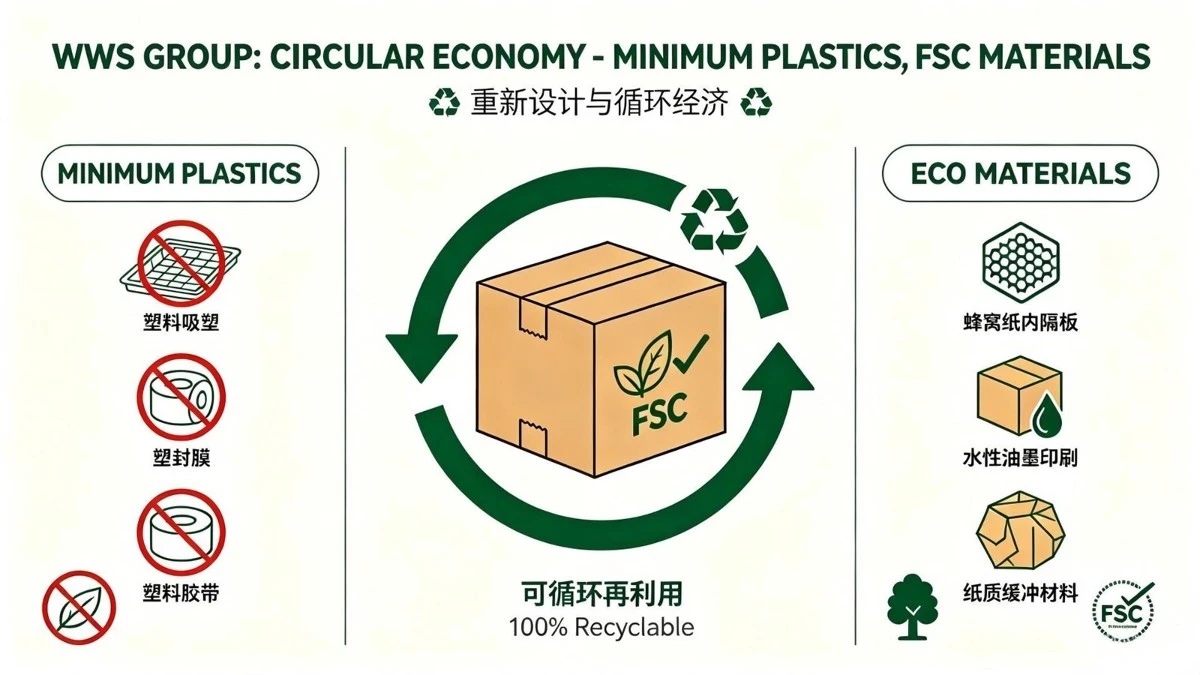
Circular Materials (RECYCLE): Establishing dedicated internal programs prioritizing Post-Consumer Recycled (PCR) content in cartons and packaging, while encouraging end-consumers to recycle ceramic packaging.
Reusable Components (REUSE): Promoting reusable transport materials during internal factory logistics and encouraging the secondary use of intact packaging components to maximize resource efficiency.
Fostering Social Value & Global ESG Compliance
Parallel to environmental innovation, WWS Group integrates Social (S) responsibility into its packaging operations. Partnering with specialized promotional packaging (Co-packing) service providers, the group integrates individuals with physical or intellectual disabilities into assembly operations, delivering high-quality packaging while providing meaningful employment opportunities for marginalized communities.
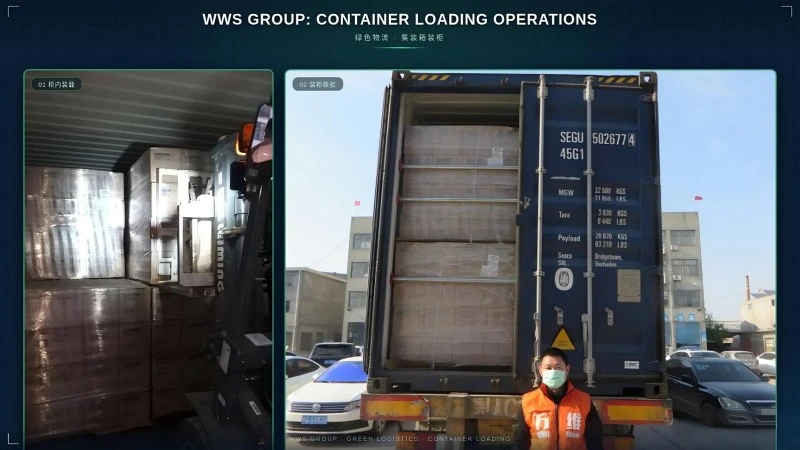
"As a pivotal node in the global ceramic supply chain, WWS Group is committed not only to delivering durable, beautifully crafted tableware but also to offering turnkey promotional packaging solutions that blend protection, cost efficiency, and environmental integrity," stated a spokesperson for WWS Group. "By adhering strictly to Extended Producer Responsibility (EPR) guidelines and maintaining end-to-end commercial data traceability, we continue to align with global retailer metrics-such as the Walmart Packaging Metrics-to build a resilient, low-carbon future."