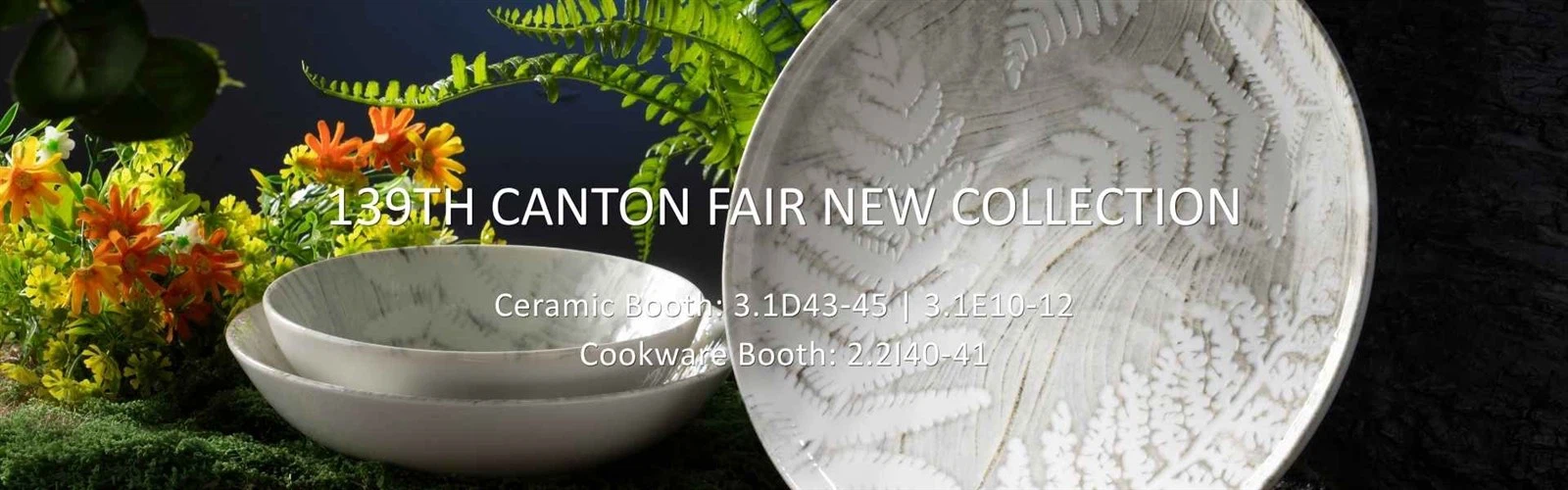
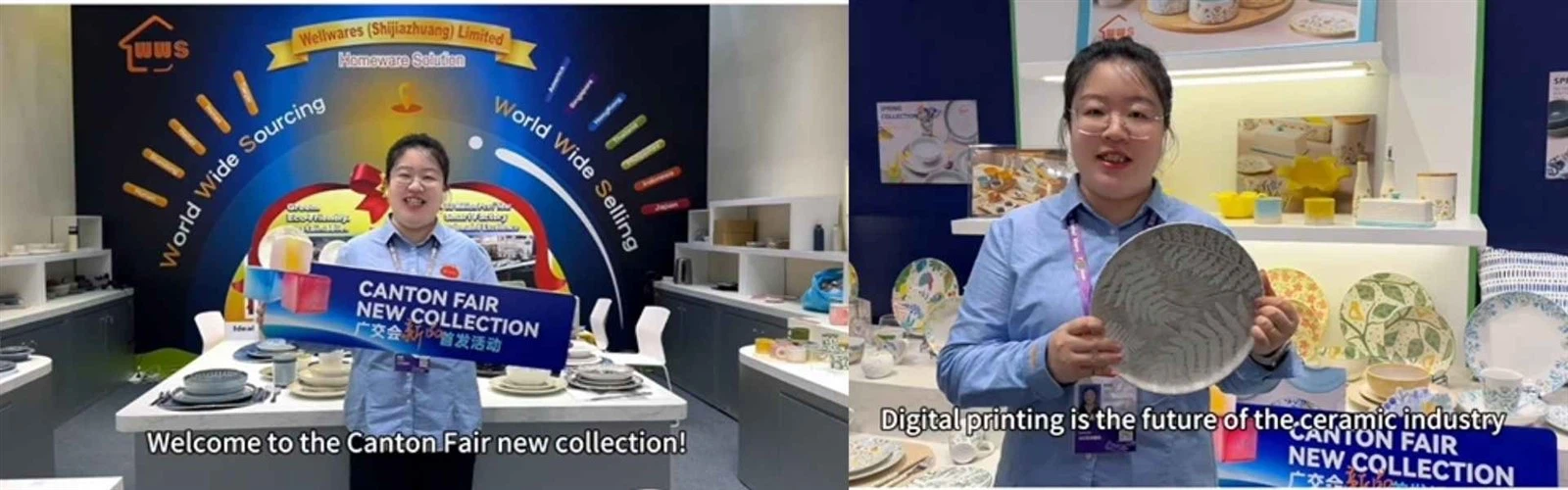
The 139th Canton Fair is in full swing at the Pazhou Complex in Guangzhou. As a regular exhibitor, WWS Group is presenting a range of new ceramic and cookware products. Among them, the "Fern Shadow" white porcelain dinnerware set – featuring digital inkjet printing technology – has become a highlight. With single firing, mold-free production, and precise color control, the product addresses buyers' growing demand for eco-compliance, low MOQ, and fast delivery.
Three Effects, One Process
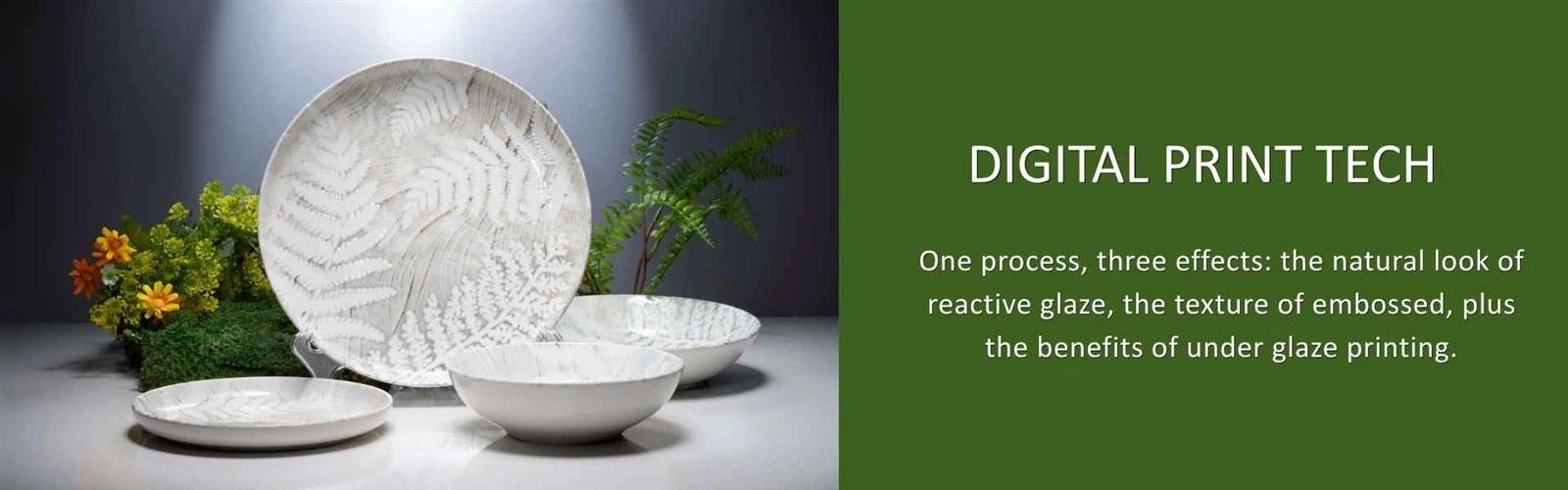
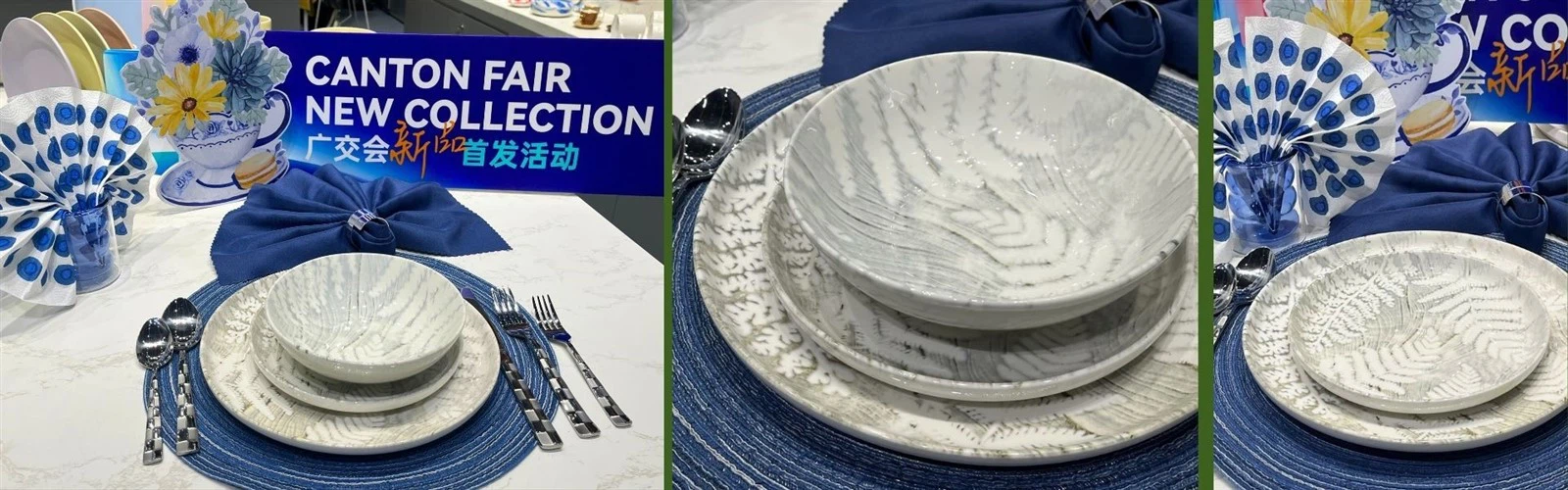
The Fern Shadow set includes 16 pieces: dinner plate, side plate, soup bowl, and rice bowl. Its core technology – digital inkjet printing – achieves three decorative effects in a single process:
- Natural texture of reactive glaze
- Three-dimensional layered effect of embossing
- Durability and color stability of underglaze printing
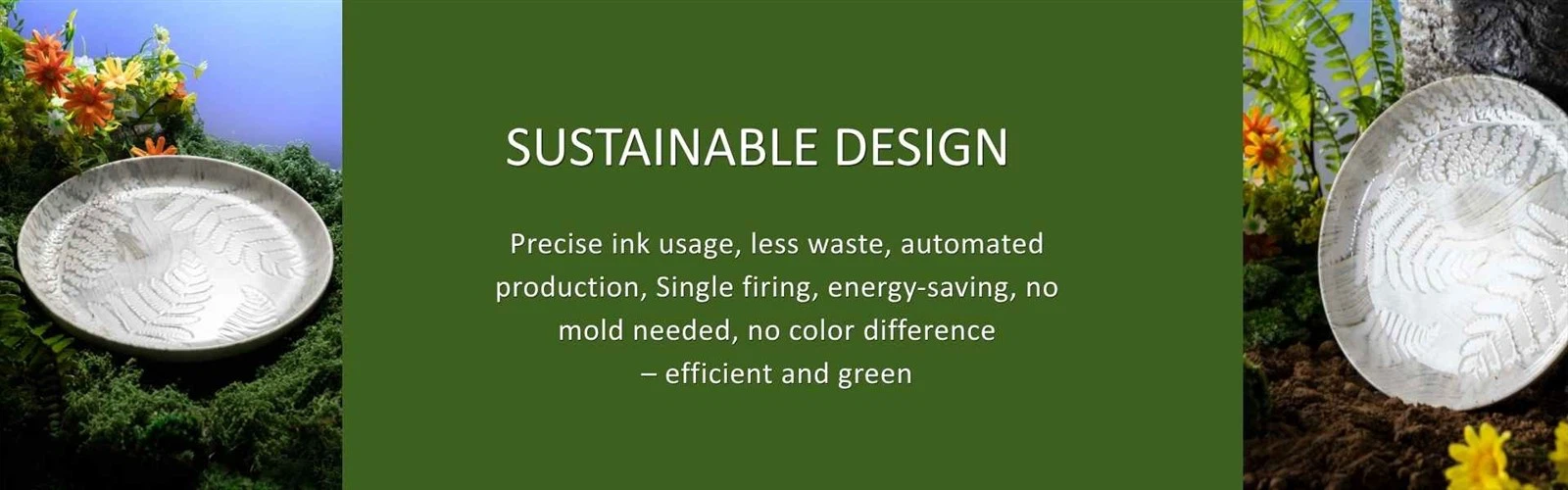
Digital inkjet printing eliminates the multiple glazing or screen-printing steps required in traditional ceramic decoration. With single firing, it significantly shortens production cycles and reduces energy consumption. In terms of visual quality, the technology prints directly from digital design files at high resolution, ensuring precise patterns and eliminating the batch-to-batch color differences common in traditional glazing and firing.
https://www.wws-ceramic.com/dinnerware-set/porcelain-dinnerware-set/digital-print-fern-shadow-white-porcelain.html
1. Solving Color Variation in Reactive Glaze
Compared to traditional reactive glaze technology, digital print solves the common issues of color deviation and misalignment. It enables fine pattern and color combinations, and can simulate traditional reactive glaze effects. Moreover, digital print uses ink precisely, reduces waste, and features high automation, high production efficiency, and strong eco-sustainability.
2. Eliminating High Mold Costs of Traditional Embossing
Compared to traditional embossing, digital print requires no mold, saving significant mold expenses. Brands can flexibly produce small batches, seasonal items, limited editions, or test-run designs – without mold investment or heavy inventory.
A Realistic Look at 3D Printing: Digital Inkjet Remains the More Practical Choice
In recent years, 3D printing has sparked discussion in the ceramic industry. Based on its own experience, WWS Group points out that 3D printing still has clear shortcomings in ceramic decoration. It cannot yet replace the mature decal process – especially for designs requiring multiple bright, saturated colors. If customers seek the vivid, rich, multi-color patterns that decal delivers, 3D printing cannot match it at this stage.
WWS Group's advice: Buyers should choose technology based on product positioning. For color richness and production efficiency, digital inkjet is the more proven solution. Only consider 3D printing for special three-dimensional shapes, and only if you are prepared for higher cost and longer lead time.
Eco-Compliance, Accepted Worldwide
In terms of safety and compliance, the Fern Shadow dinnerware set is lead-free and cadmium-free, meeting EU, FDA, and California Prop 65 standards.
Digital inkjet printing has become a mainstream direction for the industry. Well-known international brands such as Churchill and HF Coors have already launched their own digital print collections. WWS Group emphasizes that it will always offer objective and professional manufacturing solutions based on customers' different needs.
For more details, please come to the WWS booth. 👉 Like & share to embrace sustainable, beautiful living.
Come visit us at WWS Group Ceramic Booth: 3.1D43‑45 | 3.1E10‑12
https://cief.cantonfair.org.cn/cn/matching/shortvideo.html