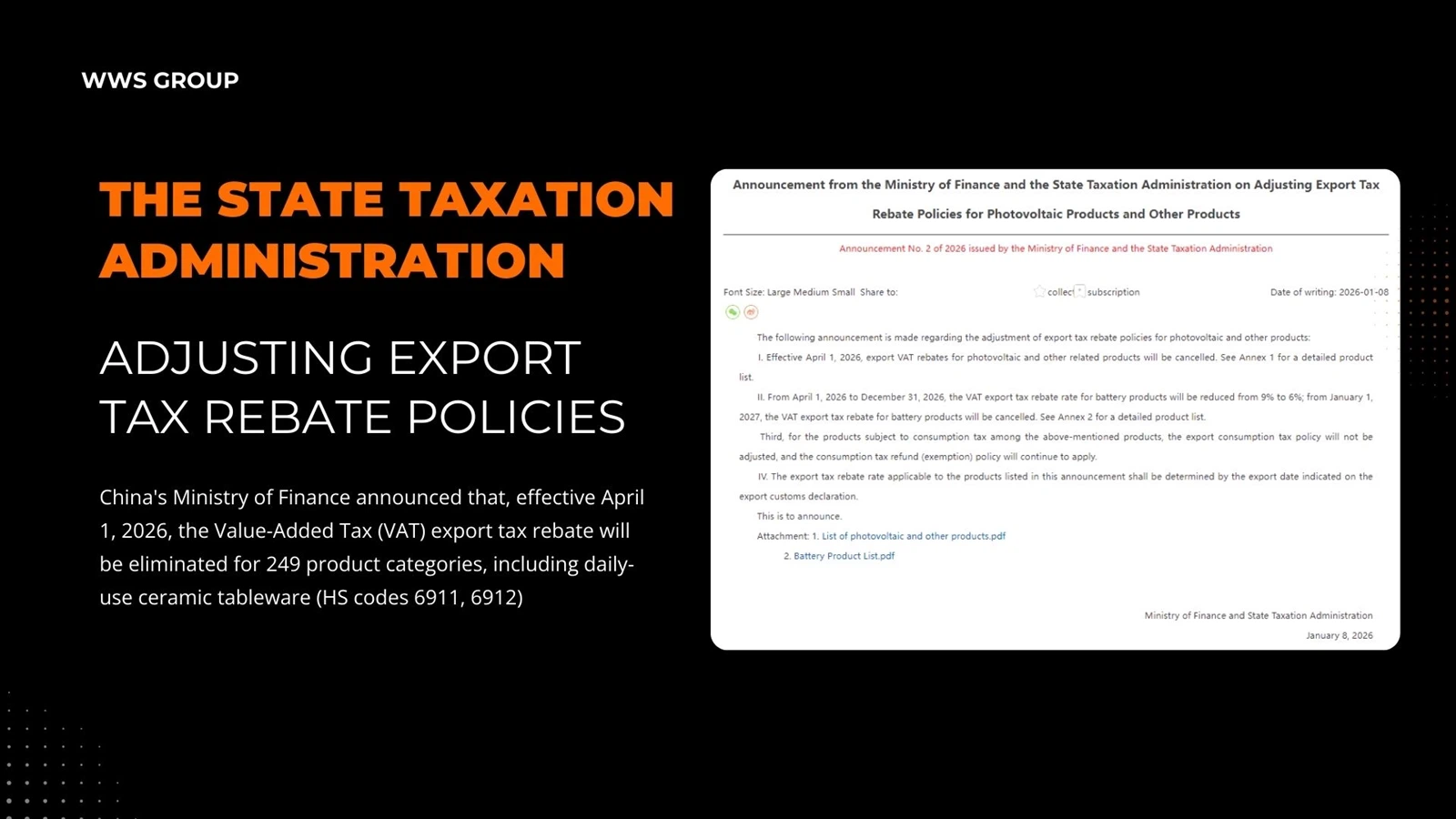
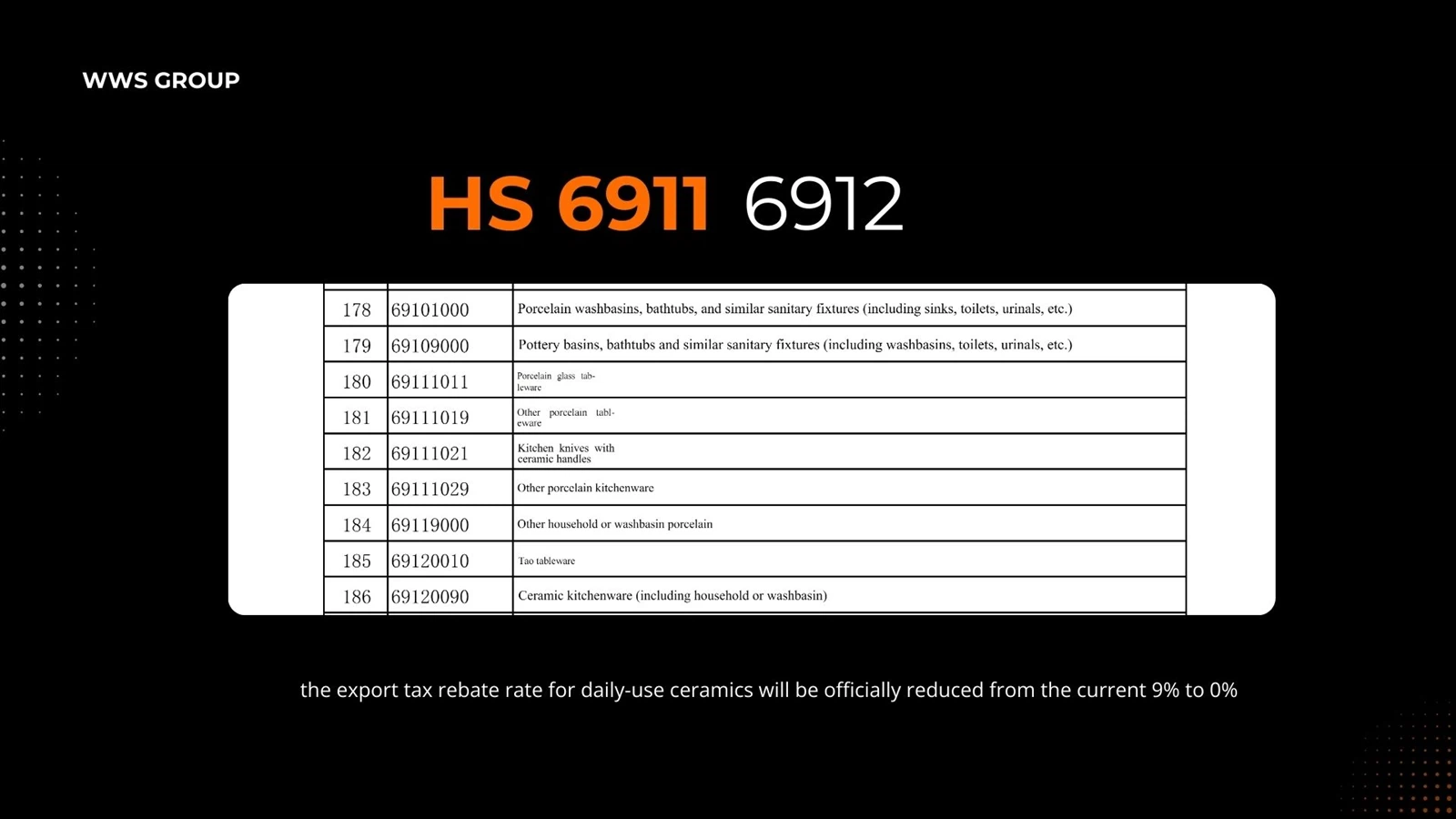
On January 9, 2026, China's Ministry of Finance announced that, effective April 1, 2026, the Value-Added Tax (VAT) export tax rebate will be eliminated for 249 product categories, including daily-use ceramic tableware (HS codes 6911, 6912). This means the export tax rebate rate for daily-use ceramics will be officially reduced from the current 9% to 0%, marking the complete withdrawal of this policy in this sector after nearly four decades of implementation.
I. Policy Evolution: From Encouraging Exports to Structural Optimization
The adjustments to China's export tax rebate policy for daily-use ceramics have consistently served the national economic strategy and industrial development stages:
- 2018: In response to changes in the external environment and to stabilize foreign trade, the rebate rate was increased from 9% to 13%, strengthening the price competitiveness of Chinese ceramics in the international market.
- 2024: Alongside industrial restructuring and the advancement of the "Dual Circulation" strategy, the rebate rate was lowered from 13% to 9%, signaling a policy shift towards guiding industrial upgrading.
- 2026: The complete elimination of the rebate indicates that the national policy focus has shifted from "scale-oriented" export support to "quality-oriented" synergistic development of both domestic and international circulation.
II. The Underlying Logic of Policy Transformation: From "Subsidizing Overseas" to "Empowering Domestic"
The essence of the export tax rebate was to reduce export costs through tax refunds, indirectly subsidizing overseas consumers and expanding international market share. However, its long-term implementation also brought certain drawbacks: increasing fiscal burdens on one hand, and objectively suppressing the development of domestic industries in some importing countries, potentially triggering trade friction.
This elimination of the rebate represents China's proactive three-fold adjustment:
- Promoting Domestic Demand Growth: Redirecting fiscal resources previously used for export subsidies towards the domestic market, such as supporting consumption upgrade policies like "trade-in" programs, to genuinely unblock the internal economic cycle.
- Forcing Industrial Upgrading: By removing cost subsidies, enterprises are encouraged to shift from low-price competition towards technological, design, and brand innovation, accelerating penetration into higher value-added markets like Europe and South America.
- Facilitating Global Production Capacity Layout: Guiding enterprises to transition from "product export" to "production capacity going global" , establishing factories overseas to be closer to markets, circumvent trade barriers, and enhance global supply chain resilience.
III. Impact and Challenges on the Industry
In the short term, ceramic export enterprises will face pressures from rising costs and weakened price competitiveness. Some companies reliant on low-price strategies may face elimination. In the long run, the policy will accelerate industry consolidation, driving resources towards enterprises with capabilities in technological innovation, brand building, and overseas layout, thereby promoting the overall value chain upgrade of the industry.
IV. WWSgroup's Response and Outlook: Forward-Thinking Layout and Innovation-Driven, Steadily Navigating Policy Transition
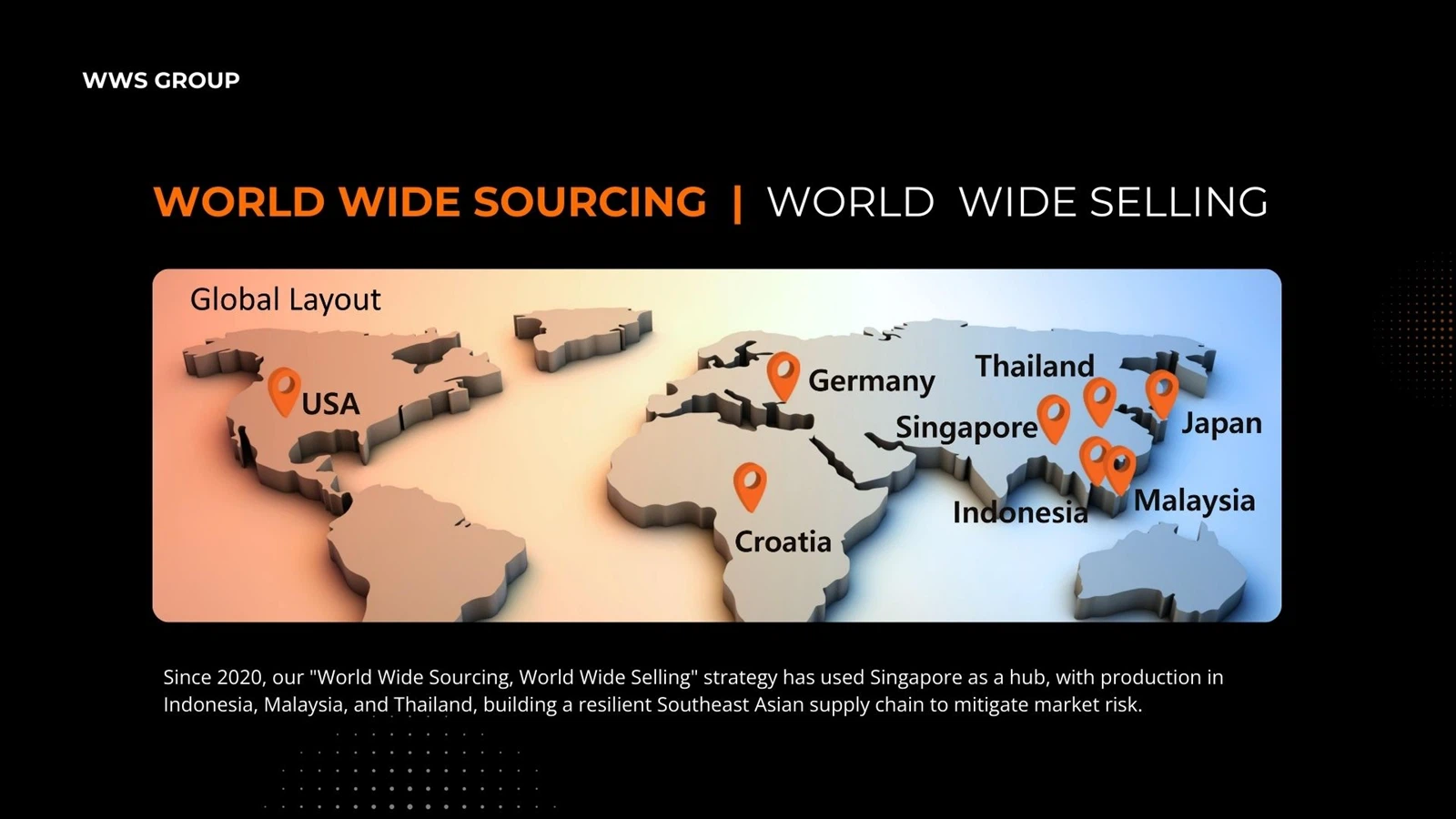
While this export tax rebate policy adjustment brings general cost pressures to the ceramic export industry, the overall impact on WWS group is manageable. This is primarily due to the company's continuous advancement of the "World Wide Sourcing, World Wide Selling" strategy since 2020, as well as long-term investment in supply chain layout and product innovation, which have endowed us with stronger risk resilience and structural adaptability.
1. Global Supply Chain Layout Yields Results
Over the past five years, WWS has continuously deepened its Southeast Asian supply chain network. Using Singapore as a regional hub, we have established localized production capacities and collaborative systems in countries such as Indonesia, Malaysia, and Thailand. This layout not only reduces operational risks associated with policy changes in any single market but also enables us to respond more flexibly to the demands of different markets, enhancing the resilience and efficiency of our global supply chain. Against the backdrop of the rebate elimination, our multi-regional production coordination capabilities will become even more prominent, providing customers with continuous and stable supply assurance.
2. Continuous Enhancement of Product Innovation and R&D Capabilities
To enhance global market competitiveness, WWS has consistently strengthened its R&D and design system in recent years. We have established a ceramic research institute at our production base, increasing investment in process and material R&D. Simultaneously, we have formed our own in-house designer team and collaborate with renowned European and American designers to continuously launch innovative products aligned with global consumer trends. This dual-driven model of "R&D + Design" is gradually shifting our reliance from a single price advantage to a comprehensive competitiveness centered on product value, brand recognition, and customized services.
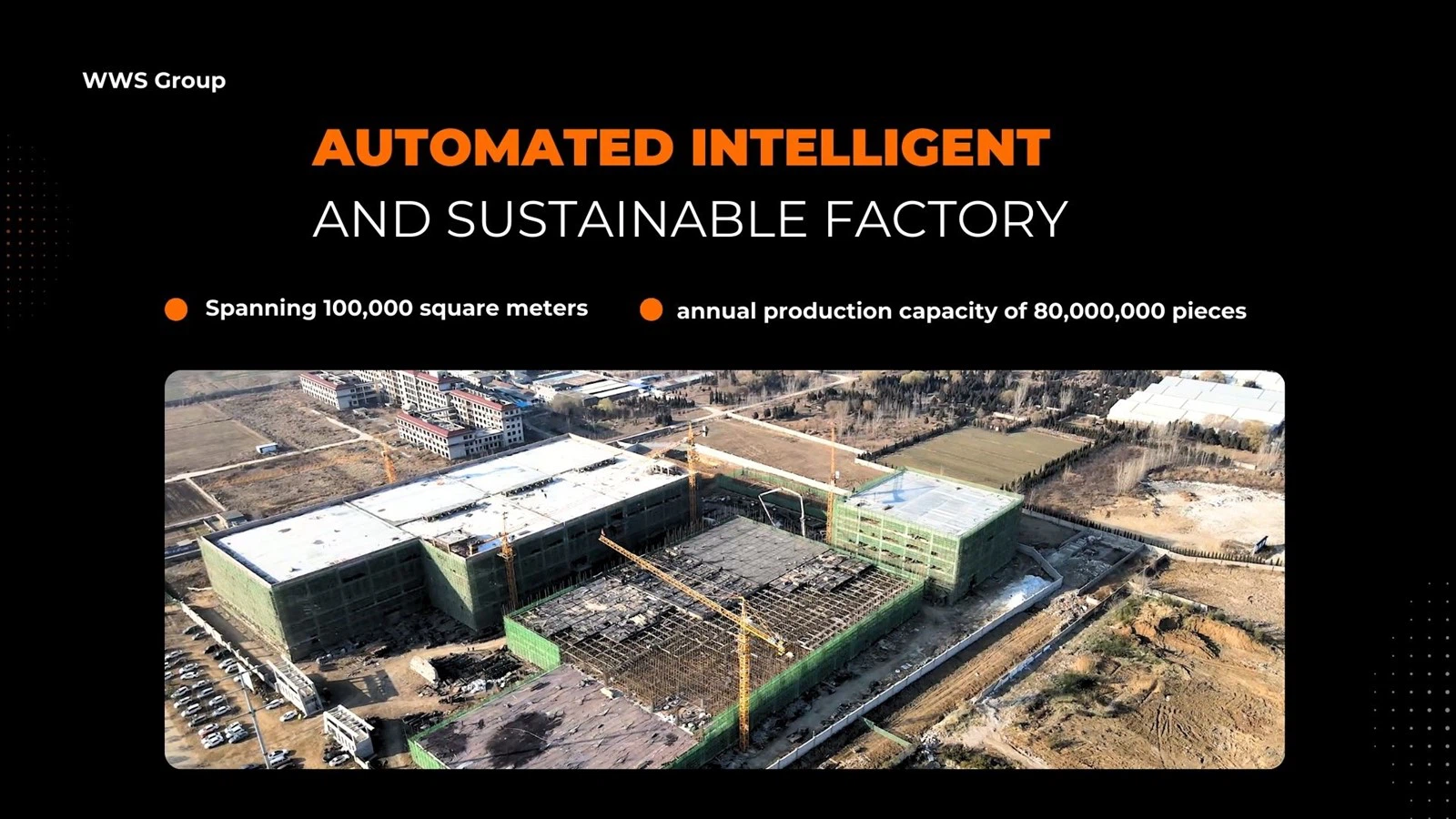
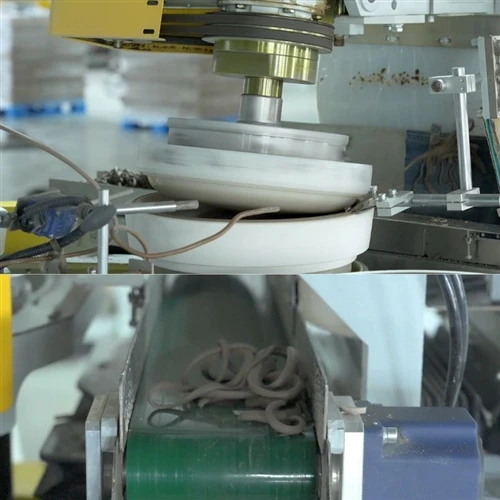
To further translate our innovative capabilities into scalable and sustainable market advantages, we are accelerating the construction of a new-generation daily-use ceramic factory covering 100,000 square meters with a designed annual production capacity of 80 million pieces. The factory is scheduled to commence its first phase of operation in March 2026 and complete its second phase in June 2026. Its most distinctive feature lies in the full implementation of automation, intelligence, and environmental sustainability in production. Through green manufacturing technologies and smart supply chain systems, it ensures enhanced production capacity and product quality while achieving efficient resource utilization and low-carbon operations. This factory is not only a key strategic move in our supply chain layout but also the core pillar of WWS's commitment to sustainable development and future competitiveness.
Although the cancellation of the export tax rebate policy presents challenges in cost restructuring in the short term, in the long run, it aligns with the strategic direction WWS has been promoting: "value-driven globalization" and "supply chain globalization." We will take this as an opportunity to further optimize cost management, accelerate the pace of innovation, and deepen the synergy between domestic and international markets. Together with our customers and partners, we aim to build a more resilient and sustainable cooperation model.
For details on specific cooperation plans or supply chain adjustment details, please contact your business representative or email us for consultation. WWS group looks forward to continuing to work hand in hand with you in this new phase of policy and market development, jointly creating a stable and win-win future.